I’m very excited to announce that my new website – which includes a new incarnation of this blog has now been launched. Thanks so much to everyone who has followed my writing journey via this blog. I hope you’ll join me as my new website launches. You also have the chance to win one of three signed copies of my new release, Close to Home if you sign up to my newsletter by June 30th. For details on how to do this and to check out my new website please go to www.pamelacook.com.au 
Posted in Uncategorized | Tagged Blackwattle Lake, Close To Home, Essie's Way, Hachette, Pamela Cook, Rural Fiction, Rural Romance | Leave a Comment »
I’m a little behind on posting the song tracks I’ve selected to go with my upcoming release, Close To Home. The reason for my tardiness is I’ve been putting together a new website which should be going live any day now. The new site will amalgamate my Author website and this blog into one space which will streamline the process of posting and allow me to post more regularly. Subscribers to this blog will be automatically moved to the new site. I’m really looking forward to sharing this with you so watch this space! In the meantime I thought I’d continue sharing the music that captures the themes and moods of the book. This week’s song, to accompany Chapter Two of Close To Home, is A Thousand Miles by Vanessa Carlton. It’s a song about returning to a place you once belonged and missing the people who were once in your life. I love the piano in this song. And watch out for the horses running along the beach.
Have a great week.
Close To Home is now available for preorder at Booktopia.
Posted in Close To Home | Tagged A Thousand Miles, Australian Rural Romance, Close To Home, Hachette, new releases, Pamela Cook, soundtrack | Leave a Comment »
This week in the Writing Inspirations series I’m excited to welcome Rural Romance writer, Cathryn Hein to the blog.

Cathryn is well known to readers of the genre and her latest novel, The Falls, is flying off the shelves.

THE FALLS
by Cathryn Hein
Will losing the home she loves mean finding the place she belongs?
For as long as she can remember, Teagan Bliss has wanted to manage her family’s property. She’s invested everything in the farm, knowing that when her parents retire she’ll be ready to take the reins. But when a family betrayal leaves her reeling, Teagan is forced to rethink her entire future.
Heartbroken, Teagan flees to her aunt’s property in the idyllic Falls Valley. Vanessa is warm and welcoming and a favourite of the locals who drop in regularly for cocktail hour. Teagan soon catches the attention of sexy local farrier Lucas Knight, and with a new job, new friends and the prospect of a new relationship, she slowly begins to open up again.
But the village is a hotbed of gossip and division and when Teagan gets caught up in town politics, Lucas and Vanessa become concerned. As the tension in town escalates, Teagan must decide who to trust. But when she realises those close to her have been keeping secrets, the fallout may split Teagan apart forever.
The Falls is an uplifting story of healing and hope from the author of Promises, Heart of the Valley, Heartland, and Rocking Horse Hill.


***
- What – or who – first inspired you to write?
I’ve always written – short stories and awful poetry at school, followed by umpteen attempts at full length fiction in my 20s that never made it past the 10,000 word mark. I still have a short story I wrote as a teenager titled A Day In The Life of a Feminist Cockroach. Bonkers is a barely adequate description for that story but I did earn a B+ for it, so perhaps it’s all my English teacher’s fault.
But I think the real inspiration came from reading. Growing up I was an avid bookworm and – other than being around horses – there was nothing better I loved than curling up with a juicy story. I’m also lucky to have been blessed with a pretty active imagination. I’m a fantastic daydreamer. Writing was a way to capture those daydreams and make them real.
- Is there a place and time of day when you feel most inspired?
I am absolutely a morning person when it comes to writing. That’s definitely the time when I produce my best work. But I also find that walking and showering are brilliant for snapping those synapses. I can be completely stumped by something but a walk or a shower will have it solved in no time.
As far as place goes, I prefer the quiet of my office, with all my props close at hand. I feel a bit lost without my whiteboards and stickynotes, but not as lost as when I don’t have my “book bible”. My book bibles are basically scrapbooks filled with scribbles about characters and settings and anything else that captures my attention. Think newspaper clippings, photographs, house plans, brochures, descriptions, plot ideas, timelines, property and town names, handwritten scenes, corrections to be made in edits. Anything and everything that helps build the book. I also keep a folder for research material that’s too thick to paste into the scrapbook. I protect those two things fiercely. They’re as much a part of the book as the manuscript.
- When you’re feeling uninspired what sort of creative activities help you get your writing mojo back?
As mentioned above, showering and walking helps a lot. But I also believe reading is a wonderful way to reclaim your mojo. Certainly it works for me. Reading a favourite author, one whose writing, storytelling and voice I admire is hugely inspiring. They make me want to be better.
If it’s more story/plot ideas or character inspiration I’m after, then I find watching documentaries helpful. Real life and history is mine of stories, often more incredible than the stuff that goes on in my head, which is saying something!
- Can you tell us about one of your characters (current or past) who has been inspired by a real person or a situation in one of your stories that was inspired by a real life event?
There are many. And I mean MANY. I think every book I’ve ever written, published and unpublished, has had at least something in it that came from a real life event. In my debut Promises, for example, there’s a scene where Sophie, on her first day working in the hero Aaron’s yard, has one of the racehorses bolt on her. That happened to me on my first day at a racing stable and Sophie’s solution is exactly what my dad, a former jockey, told me to do should that ever happen. My current rural romance release, The Falls, features a crazy ram that is based on one my parents once kept. The list of real-life inspirations is huge.
- What was the inspiration for your current book?
In January of 2013 we relocated from Melbourne to the foot of the Blue Mountains. At the time I’d already begun writing Rocking Horse Hill and it was always my aim to give each of the female friends in the book their own story. Emily’s story was told in Rocking Horse Hill, with Teagan’s in The Falls, and Jasmine’s in what will one day be Admella Beach.
When, in Rocking Horse Hill, Teagan needed a place to escape the area we’d moved to provided the perfect inspiration. The Falls Valley and village isn’t actually real, it’s a heavily fictionalised version of the area, but it has a similar landscape. The land is dotted with hobby farms and horse properties, which meant plenty of opportunities for Teagan to find employment and take the time to recover from the shock of losing her life’s dream.
I also thought it was a great place for a hero like Lucas Knight to have settled. He’s a city boy who’s built a successful career as a rural farrier. The Falls and surrounding areas are the sort of places that would not only provide plenty of work, but be a gorgeous location for a hero to live.
So parts of the story owe lot to the landscape and demographics of the area. Ever-sprawling Sydney is creeping further and further west, driving agriculture and rural life with it. Not everyone appreciates that, and that’s cause for some of the villagers’ dissention in The Falls.
I also wanted an excuse to write a ram character like Merlin, who, as I’ve mentioned, was directly based on a ram my parents kept. That animal caused so much trouble but, like Teagan’s Aunt Vanessa with Merlin, we were all weirdly fond of him.
*
Connect with Cathryn:
Buy Links:
Posted in Uncategorized | Tagged Cathryn Hein, Close To Home, fiction, Hachette, Pamela Cook, Romance, Rural Fiction, Rural Romance, The Falls | 2 Comments »
Being a music lover I often find a link between my writing and certain songs, often in the mood the music creates but more frequently in the way the lyrics connect to the themes of the novel I’m working on at the time.
For Close To Home I decided to formalize this process a little and created a soundtrack of songs which sum up the ideas of the novel as a whole and of each chapter in particular.
So, with just over six weeks to go until release day, and with a total of sixteen chapters in the book, I’ll be revealing my soundtrack, one song at a time over the coming months.
First up is a song by Florence And The Machine called Shake It Out. Without giving too much away, the main character in the novel, Charlie Anderson is faced with something of a crisis as the story begins. The lyrics of this song hint at Charlie’s dilemma. Copyright laws don’t allow me to quote too many lyrics here but I will say that Florence’s advice to ‘shake off’ the ‘devil on your back’ is something that Charlie really needs to take on board.
But will she?
Here’s the gorgeous film clip for your listening and viewing pleasure (my favourite image is the one of Florence walking along the tree branch towards the end):
Tune in next Monday for the track to Chapter 2.
Have a great week.
x
Posted in Uncategorized | Tagged Close To Home, Florence And The Machine, Hachette, novel soundtrack, Pamela Cook, Shake It Out, writing and music | Leave a Comment »
Today I welcome Kim Cleary to the blog to chat about where she finds the inspiration to write.
Kim writes urban fantasy for anyone who longs to discover they are extraordinary. She writes about hopefulness and determination, and about heroes who push through extraordinary situations and obstacles, one step at a time. Magical friends and gorgeous guys help, or hinder, in one adventure after another.
All sounds pretty good to me!
*
Thank you so much Pamela for having me on your blog. I’ve really enjoyed thinking and talking about what has inspired me to write, and in particular to talk about my inspiration for the series I’m working on now: Daughter of Ravenswood

- What – or who – first inspired you to write?
My very first story was inspired by Ratty and Mole, and their adventures in Wind in the Willows. I wrote a short piece of fan-fiction at age seven, my English teacher asked me to read it aloud to the class and I was in heaven!
- Is there a place and time of day when you feel most inspired?
Normally I work best in the morning. But I tend to work for short periods, collapse with fatigue and rest, then try and work a bit more! Like a lot of other writers, I get ideas, snippets of conversation, an emotion or setting, that feels brilliant at 4 AM in the morning. I always go to bed with my iPad so I can record anything that comes to mind–even if a lot of the thoughts don’t look quite as brilliant in the light of day.
- When you’re feeling uninspired what sort of creative activities help you get your writing mojo back?
I like to spend some time away from the computer. I write by hand in one of my journals, do some decoupage; if it’s fine I like to spend some time in my garden. Sometimes just sitting on a different chair in the sun makes all the difference. I’ve danced around the house to my favourite music, brushed my dogs, and even… in extreme circumstances, got some housework done!

- Can you tell us about one of your characters (current or past) who has been inspired by a real person or a situation in one of your stories that was inspired by a real life event?
My heroine was always going to be a necromancer. I’m not sure I can explain why! Even as a child, I was interested in the culture of death and the dead. I’ve also always been a bit contrary, so perhaps I just wanted to go against the norm. I tried to paint Meagan as a compassionate character from the start of the story, and to show her own conflict with her power over the dead. Meagan accepts that she has a responsibility for the dead. She not only speaks to them, she cares for them as well.
Meagan’s father plays a small but critical role in the story, and he’s based on my dad. I lost him to cancer a few years ago, and I still miss him every day. If I could call his spirit and sit with him in his shed while he tinkered with this or that, I would do it in a heartbeat.
- What was the inspiration for your current book?
Four years ago, I started writing a short story when I was diagnosed with MS. It caused severe pain, and eventually permanent damage in my hands, which stopped me from typing. I had to teach myself how to use voice software and a good friend gave me an opening line to get me started on a short story.
I’ve always loved fantasy and science fiction and found myself gravitating to it. I shared pieces of the story with my sister and a small number of friends, received positive feedback and encouragement, and I just kept going with it. By the time I was let go from work, I had 35,000 words written and several ideas on how to take it to novel length!
The short story morphed and became my debut novel Path Unchosen.
Connect with Kim:
Facebook: https://www.facebook.com/KimClearyWriter
Twitter: https://twitter.com/kimclearywriter
Blog: Kimcleary.com
Twitter: https://twitter.com/kimclearywriter
Blog: Kimcleary.com
Posted in Inspiration, Interviews With Writers | Tagged Daughter of Ravenswood, Indie Author, Kim Cleary, Pamela Cook, Path Unchosen, self publishing, urban fantasy, writing inspiration | Leave a Comment »
Now that I’ve finished my edits on Close to Home I’m excited to be focusing back on my blog and plan to post a few times each week. Fridays are going to be all about Inspirations – the people, places and things that inspire me to write. I’ll also be inviting a number of other writers on to the blog to tell us about their inspirations so I hope you’ll visit each Friday and I hope you’ll be inspired.
To kick off this series I’ve done an interview with myself, so here goes …
1. What – or who – first inspired you to write?
I can’t exactly remember what first inspired me to write back when I was a teenager scribbling down poems and writing in diaries. I guess it was about finding an outlet for all that teenage angst. When I travelled extensively in my twenties I wrote journals about the places I visited and the people I met, following this up with a correspondence course in Travel Journalism that I never did anything with. After teaching for about 15 years I decided I wanted to write creatively rather than put red marks on student essays and so I enrolled in a Masters Of Creative Writing and haven’t stopped writing since. One of my first inspirations in terms of place was Nepal, which i wrote about in my previous post. The book that first gave me the ‘I want to write like this’ thought was The Hours, by Michael Cunningham. I loved the way he switched times and characters so seamlessly and weaved the stories of the three women together so beautifully.

- Is there a place and time of day when you feel most inspired?
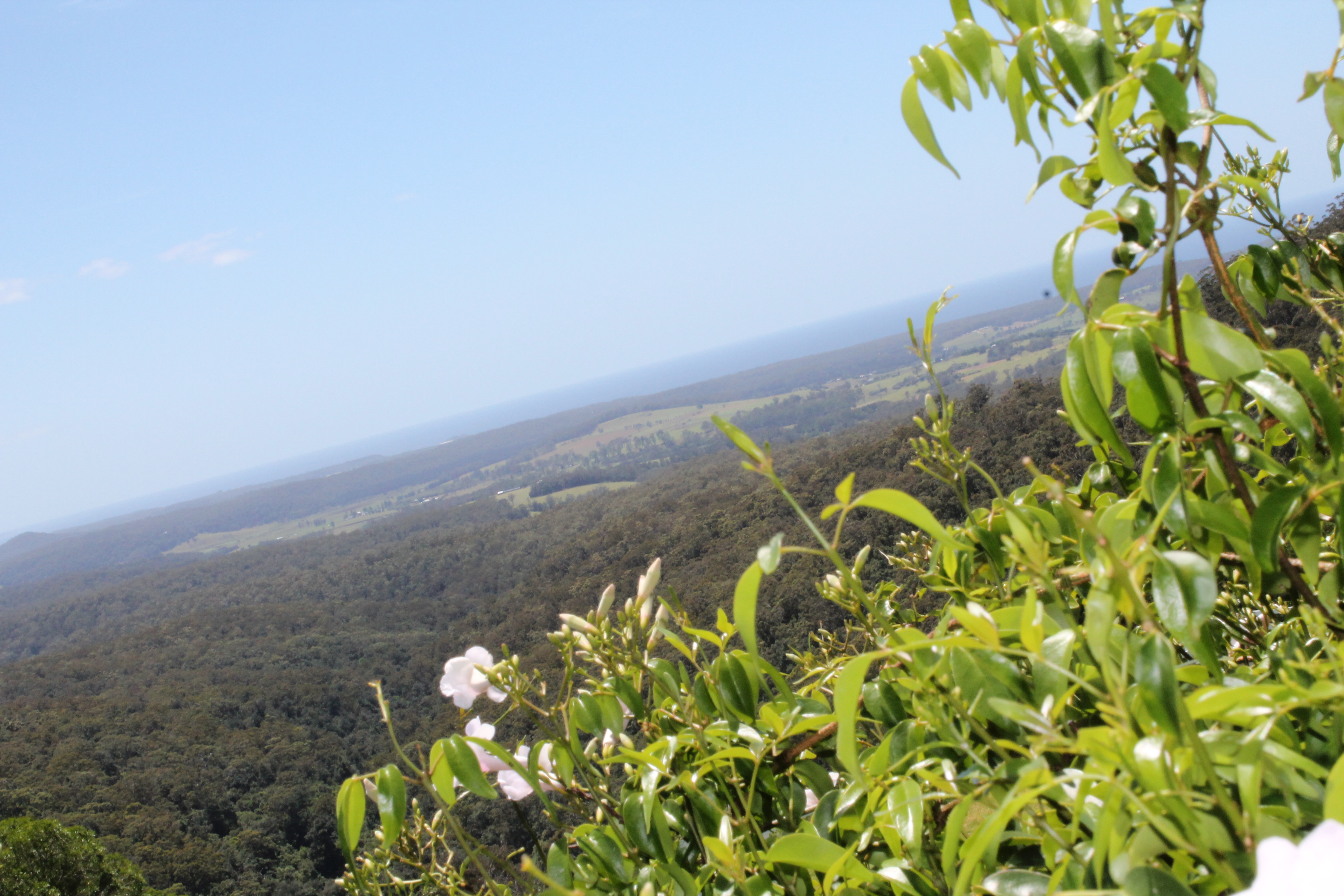
I used to get up and write first thing in the morning but these days can’t seem to drag myself out of bed. Now the best time for me to write is between about 9am and 2pm. After that the house starts to get noisy again, there’s dinner to think about and my brain starts to hurt. Usually I write in my study but when that resembles a war zone (as it does now) I resort to the dining table. My favourite place to write is on the deck of my getaway house at Milton with a gorgeous view to look at in between jotting down words.
- When you’re feeling uninspired what sort of creative activities help you get your writing mojo back?
Nothing works better for me than a deadline! But we don’t always have those. Writing in a beautiful place (see above) can work, meeting with fellow writers (I am blessed to have quite a few in my life) and chatting about books and writing and getting out of the house and walking or doing some yoga usually re-energises me. Listening to music often helps too. And going for a horse ride, of course!

- Can you tell us about one of your characters (current or past) who has been inspired by a real person or a situation in one of your stories that was inspired by a real life event?
To begin with my characters are usually bits and pieces of people I’ve met but they gradually morph into themselves and I start to think of them as real people by the time I’ve finished the first draft. My first published book, Blackwattle Lake, was inspired by my involvement with horses and that has continued through to my soon-to-be-released novel Close To Home. The Black Saturday bushfires also had an influence in that first book and in Essie’s Way I was inspired to a story of a woman rescuing a shipwreck survivor in the middle of a storm on horseback.
- What was the inspiration for your current book?
The initial inspiration for Close to Home was my conversation with another pony club parent about the Hendra virus. It made me realise what a contentious issue vaccination was and made me wonder what would happen if an outbreak occurred in the area where we live. For those who don’t know Hendra is a disease carried by bats and spread to horses and then potentially to humans. It has been responsible for quite a few horse deaths and 4 human deaths in Australia over the last two decades. I’ve taken a real situation and fictionalised it but the story developed into a much deeper one about family relationships and dealing with the past.

*
Essie’s Way (ebook) is currently on sale at Amazon for only $4.99. Click here to buy.
Close to Home is now (ebook) is now available for pre-order. Click here to order.
All three books are available in print at your local book seller. If you can’t see them on the shelves please ask at the counter. 🙂
*
Thanks for dropping by.
Would love to hear about who or what inspires you – in writing or in life .
x
Posted in Creativity, Inspiration | Tagged Blackwattle Lake, Close To Home, Essie's Way, Hachette, horses, writing inspiration | Leave a Comment »
I’m diverting a little from my usual posts today to express my deep sorrow at the devastation in Nepal. This country has a special place in my heart and memory. It is the place that first inspired me to write a novel, Shallow Crossing, and even though that novel remains unpublished it’s the book that taught me how to write. Even if it never makes it out of the bottom drawer it will always be my favourite.
The news about Nepal has brought back a lot of memories for me. My partner and I visited there in December 1991. We did what many travellers to the country do – spent time in Kathmandu, then, using our trusty Lonely Planet guide book, visited the beautiful Pokhara region on a two week self guided trek, staying in tea houses, meeting wonderful people and attempting to take in the breath taking landscape. I say attempting to because the beauty of the place is actually indescribable. There are no words to capture the majesty of the Himalayas. I’d never understood why people would want to climb mountains until then but standing there and gazing out at those mountains I began to realise it was all about setting yourself a challenge and pushing yourself to the limit in order to get there.

This grainy old photo doesn’t do the mountains justice but the Himalayas are truly awe inspiring.
The other thing that struck me about Nepal was the people – the way they approached the challenges of their daily lives with such gracious acceptance. In western society we spend a great deal of time complaining about what we don’t have and all the things we have to do but in this country where the people have so little I found their gratitude for what they did have, and for life in general, truly humbling.

Nepalese women and a much younger version of me smiling for the camera
My connection with Nepal deepened further when my writing group, The Writers’ Dozen, put together an anthology of our work called Better than Chocolate. We printed one thousand copies, the profits going to Room To Read, a global not for profit organisation that I subsequently became involved with and for which I am now a proud Writer Ambassador. Through the sales of our book we were able to raise enough money to build a school library in Nepal.

Looking at the devastating images of the aftermath of the earthquake has had me pulling out old photo albums and reminded me of the ways in which our lives can become so intricately linked with a particular place. It’s also reminded me of the precariousness of life, especially in third world countries like Nepal where the poverty that people have to deal with everyday is so often exacerbated by natural disasters. Of course the loss of life is the prime concern but the damage to centuries old buildings and temples is also heartbreaking.

A photo I took in 1991, the view from the Old Palace in Kathmandu. So much of this would now be destroyed.
You can see an interview with Room To Read’s founder, John Wood, talking about the devastation here: http://cnn.it/1divoVw
I’ve always wanted to return to Nepal and hope that one day I will. In the meantime I’ll be donating to Room To Read’s Earthquake Fund (click on the link for more information) and sending prayers out for those who have suffered.
I hope you will join me.
Posted in Uncategorized | Tagged Blackwattle Lake, Close To Home, Essie's Way, Hachette, Nepal Earthquake, Pamela Cook, place in writing, Room to Read | 2 Comments »
In less than three months my new book, Close To Home will be hitting the shelves so I thought now might be as good a time as any to give you a sneak peek of the gorgeous cover Hachette have created and to tell you a little about the story.
So without any further ado …
A captivating story that shows the only thing harder than letting go is moving on.
Orphaned at thirteen, Charlie Anderson has been on her own for half her life. Not that she minds – she has her work as a vet and most days that’s enough. Most days. But when she’s sent to a small town on the New South Wales coast to investigate a possible outbreak of the deadly Hendra virus, Charlie finds herself torn between the haunting memories of her past, her dedication to the job and her attraction to a handsome local.
Travelling to Naringup means coming face to face with what is left of her dysfunctional family – her cousin Emma, who begged Charlie not to leave all those years ago, and her aunt Hazel, who let her go without a backwards glance. But it also means relying on the kindness of strangers and, when she meets local park ranger Joel Drummond, opening her heart to the possibility of something more . . .
As tensions in the country town rise, can Charlie reconcile with the past and find herself a new future in the town she left so long ago?
At the moment the Kindle edition of Close To Home is available for pre-order on Amazon but I’ll let you know when other links are available.
Hope you love the cover as much as I do!
Posted in Uncategorized | Tagged Close To Home, Hachette, Pamela Cook, Rural Fiction, Rural Romance | 6 Comments »
It’s been a while since my last series of posts, mainly because I’ve been wallowing in the slump I generally find myself in once I do the final revisions on a novel. But I’m starting to drag myself out of my post Close To Home swamp and back into the real world. Where it’s time to start thinking about what’s next
Unfortunately I’m not one of those writers who has a zillion ideas and not enough time to write them all. Ideas, for me, tend to brew slowly, simmering away on the back burner of my subconscious until I decide to turn up the heat and start cooking. To continue with the kitchen metaphor I generally don’t throw together a banquet but concentrate on one dish at a time, channelling all my energies into coming up with the right ingredients and concocting a memorable experience for the reader. That’s not to say that writers who work on more than one novel at a time, or one idea at a time, aren’t able to serve up an entire menu of quality reads – I know many that can and I envy their wizard like abilities. Sadly though, that’s not my creative style.
So when one story comes to an end and the proof pages are emailed off to my editor I’m usually at a point (like now) where I have a notion of what I want to write next but not the entire plot. I’m a pantser, someone who writes without knowing where the story is heading and works it out along the way. Sometimes that means I get stumped at a certain point so this time I decided I was going to plan more and not start writing until I had a pretty good idea of where the story was going. Despite my attempts to sit down and come up with an outline and structure it hasn’t happened so I’ve decided to throw those particular plans out the window and revert to my usual process: start writing and see what happens. I’ll keep you posted on how that works out.
In the meantime I’ve been doing what Julia Cameron (The Artist’s Way) calls ‘filling the well’ with good books and good music.

I’m a lover of country music and this week caught the US band Lady Antebellum at one of their Sydney appearances. I first saw these guys about 6 years ago at a regional Keith Urban concert (before Keith was on Australian/American Idol he actually played smaller venues). It was fantastic to see how far the band has come, how their support base has grown and how much they absolutely love performing. The joy Charles Kelley received from the audience’s reaction to the music was obvious and infectious, making it a truly fun night. Of course it didn’t hurt that he’s great eye candy too!

The book I’ve been reading this week, shortlisted last year for The Man Booker Prize, is We Are All Completely Beside Ourselves by Karen Joy Fowler. I can’t say too much about the storyline as there’s a serious issue with spoiling something crucial but I can say that it was a pleasure to read a book that made me laugh out loud, brought tears to my eyes and was written so brilliantly by an articulate, clever author. I highly recommend it – but also recommend you don’t google it or look up reviews in case that spoiler I mentioned appears somewhere. Just read it and enjoy!

Oh, and today I went to see The Second Best Exotic Marigold Hotel. I can’t say I enjoyed this sequel as much as the first one (when do you ever really?) but the stellar cast and the gorgeous setting made for an enjoyable two hours. Made even more enjoyable by the addition of Richard Gere. That man is still drop dead gorgeous.
Sigh!
So that brings me to the end of the week …when tomorrow morning at 5.30 am I’ll be sitting here starting on the first chapter of my new book. There, I’ve done it, committed.
I’ll let you know how that goes.
What have you been watching. listening to and reading this week?
Posted in Creativity, Inspiration | Tagged Close To Home, Hachette, Lady Antebellum, Pamela Cook, The Artist's Way, We Are All Completely Beside Ourselves | 3 Comments »
I’ve just put the final – truly final – touches to my new manuscript, Close To Home, a feeling at once exhilarating and terrifying. Exhilarating because it marks the end of a year long process of writing, revision and proof reading and terrifying because before too long the novel will be out there in the world for all to see. And read. And judge.
But more about that later.

The tagline for Close To Home – scarily appropriate as I come to the end of the process.
Right now I’m excited to be the new tutor for The Year Of The Novel Online run by Queensland Writer’s Centre and developed by the talented and prolific Kim Wilkins aka Kimberley Freeman. I’m a huge fan of Kim’s novels so feel extremely privileged to be participating in this course.
The course allows participants to work from the comfort of home, working on their own novels with the support of an online group and the guidance of an experienced tutor – in this case, moi!
The course starts on March 9. If you think it might be for you, you can find more details here.
Would love to have you onboard.
Posted in Advice and Information | Tagged Hachette, Kim Wilkins, Kimberley Freeman, Pamela Cook, Queensland Writers Centre, QWC, The Year Of The Novel Online, writing course | 2 Comments »
 Flying Pony
